




Have you ever wondered if your idea of fun might be too limited? Most people stick to what feels familiar, but curiosity can open doors to unexpected excitement. When you explore new experiences, you often find pleasure in places you did not expect. Psychological studies show that curiosity activates reward centers in your brain, much like pleasure does. You might notice that highly curious people enjoy richer social interactions and a greater sense of belonging. Wild Kinks invite you to question your assumptions and discover what truly excites you, reminding you that natural curiosity can lead to genuine satisfaction.
Key Takeaways
- Curiosity opens doors to new experiences. Explore beyond your comfort zone to discover unexpected joy.
- Wild Kinks challenge traditional ideas of pleasure. They can help you learn more about your desires and what excites you.
- Openness to new experiences leads to better communication and deeper connections with your partner.
- Trying new activities together can reignite passion and excitement in your relationship.
- Consent and communication are essential. Always discuss boundaries and check in with your partner.
- Joining a supportive community can provide valuable insights and help you feel less alone in your exploration.
- Challenging your assumptions about pleasure can lead to personal growth and greater self-acceptance.
- Celebrate your desires and embrace your curiosity. They are valid and can lead to a more fulfilling life.
What Makes a Kink Wild

Defining Wild Kinks
You might wonder what sets Wild Kinks apart from other interests. A kink becomes “wild” when it challenges common ideas about pleasure or pushes the boundaries of what most people consider normal. These kinks often involve activities that break away from traditional sexual scripts. For example, rough sex, power exchange, or role play can all fall into this category. Many people assume that only a small group explores these interests, but research tells a different story.
| Study | Sample Size | Age Range | Percentage Reporting Rough Sex Behaviors |
|---|---|---|---|
| U.S. National Survey of Sexual Wellbeing | 2525 | 18–88 | 35% of women 18–24, 11% of women 25–29 reported choking |
| Belgium Study | 1027 | 18–65 | 20-30% reported interest in hitting during sex |
| Germany Survey | 1101 | 18–69 | 29% reported engaging in rough sex |
| Australian Survey | 4702 | 18–35 | ~50% reported choking/strangling during sex |
| U.S. College Survey | N/A | College Students | >80% reported engaging in rough sex |
| SEAS | N/A | 18–91 | 42% of women, 40% of men found rough sex appealing |
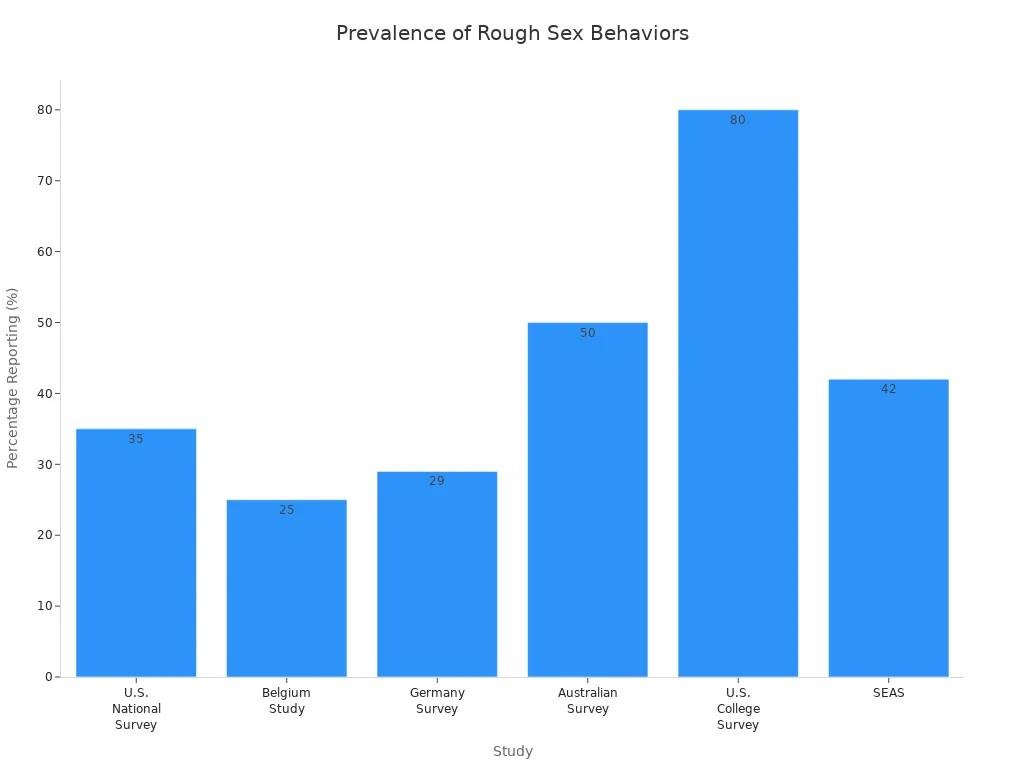
These numbers show that Wild Kinks are more common than you might expect. Many adults have tried or are curious about activities that go beyond the usual.
Fun Beyond the Mainstream
You may ask why people seek out Wild Kinks. The answer often lies in the desire for excitement and novelty. Mainstream ideas of fun can feel limiting or repetitive. When you try something new, your brain releases dopamine, which increases pleasure and motivation. Wild Kinks offer a way to break free from routine and discover new forms of enjoyment. They allow you to explore sides of yourself that you might not show in everyday life.
Trying something outside the norm can help you learn more about your desires and what truly excites you.
Curiosity and Openness
Curiosity drives you to explore Wild Kinks, but openness helps you enjoy them. Research shows that people who stay open to new experiences report higher sexual satisfaction. You communicate better, understand your partner’s needs, and feel more fulfilled. When you approach new experiences with an open mind, you create space for growth and connection. You also challenge your own assumptions about what is possible and what is pleasurable.
- Openness leads to better communication.
- Curiosity sparks excitement and discovery.
- Both qualities help you redefine what fun means for you.
Wild Kinks invite you to question the limits of your pleasure and encourage you to see fun in new ways.
11 Wild Kinks to Explore
Sensation Play
Sensation play invites you to explore pleasure by focusing on your senses. This type of Wild Kinks experience often uses simple tools or techniques to heighten touch, sound, or scent. You might find that restricting one sense, like sight, can make every other sensation feel more intense.
Blindfolds and Touch
When you wear a blindfold, your brain adapts by sharpening your other senses. Every sound becomes clearer, and the anticipation of touch grows stronger. Many people describe the feeling of a partner’s hand or breath as electrifying when they cannot see what comes next. Sensation play with blindfolds can:
- Enhance your experience of touch, sound, and scent.
- Build anticipation and excitement.
- Deepen your connection with your partner.
Tip: Start with a soft scarf or sleep mask. Communicate with your partner about what feels good and what does not.
Research shows that blindfolded sensory play supports neuroplasticity, helping your brain adapt and strengthen sensory perception. This practice can make your intimate moments more memorable and exciting.
Case Example:
Imagine you and your partner in a quiet room. You put on a blindfold. Suddenly, every gentle touch feels new. The sound of whispered words or the scent of perfume becomes more noticeable. You might laugh, gasp, or shiver with anticipation. This simple act can transform a familiar experience into something thrilling.
BDSM
BDSM stands for bondage, discipline, dominance, submission, sadism, and masochism. This category of Wild Kinks focuses on power dynamics and structured play. Many people find that exploring these roles helps them break free from everyday stress and routine.
Power Exchange
Power exchange means that you and your partner agree to take on different roles, such as dominant and submissive. This dynamic can feel liberating because it allows you to step outside your usual self. Studies show that engaging in consensual power exchange can:
- Reduce stress and anxiety.
- Increase feelings of intimacy and trust.
- Provide a sense of control and empowerment.
| Study Location | % Interested in BDSM | % Engaged in BDSM |
|---|---|---|
| Belgium | 26% | 46.8% |
| Finland | 38% | N/A |
BDSM activities require clear communication and trust. You set boundaries and agree on safe words before you begin. Many people describe the experience as meditative, helping them focus on the present moment and escape daily worries.
Case Example:
You might choose to let your partner take control for an evening. You follow their instructions, knowing you can stop at any time. This trust can make you feel closer and more confident in your relationship.
Restraint and Discipline
Restraint involves limiting movement, such as using handcuffs, rope, or even a tie. Discipline can include rules or playful punishments. These practices challenge the idea that pleasure must always be gentle or predictable. Instead, you discover new ways to feel excitement and satisfaction.
- Bondage is one of the most recognized forms of restraint.
- Sadism and masochism involve giving or receiving pain in a safe, consensual way.
Note: Always discuss boundaries and use safe words. Start slow and check in with your partner often.
Foot Fetish
Foot fetishism is one of the most common body-related kinks. You might feel drawn to feet because of their appearance, scent, or the taboo surrounding them. This Wild Kinks interest appears in many cultures and has a long history.
Feet as a Focus
Surveys show that a significant portion of adults have fantasies or fetishes related to feet. For example:
| Study/Source | % of Men | % of Women | Notes |
|---|---|---|---|
| Belgian Survey (2017) | 17% | 4% | Fetish interest in feet |
| Lehmiller Study | 14% | N/A | Gay and bisexual men most likely |
| AOL Search Data | N/A | N/A | “Feet” most common fetish search term |
Cultural factors shape how people express and accept foot fetishism. As society becomes more open about sexuality, you may notice more people discussing or exploring this interest. Gender and sexual orientation also influence how common this kink is.
Case Example:
You might enjoy giving your partner a foot massage or kissing their feet. For some, the act of focusing on feet feels intimate and exciting. You can start by talking about what you both enjoy and setting clear boundaries.
Remember: Every interest is valid as long as it is consensual. Exploring Wild Kinks like these can help you learn more about yourself and your partner.
Exhibitionism
Exhibitionism invites you to explore the excitement of being seen. This kink centers on the act of exposing yourself or your activities to others, often in a consensual or semi-public setting. Many people find the idea of being watched thrilling because it challenges social norms and taps into deep psychological motivations.
The Thrill of Being Seen
You might feel a rush when you know someone is watching. Exhibitionism can involve anything from wearing revealing clothing in public to engaging in intimate acts where there is a chance of being observed. The motivations behind this kink are complex and can include a desire for sexual attention, a wish to shock, or even a need to demonstrate ownership or control.
| Motivations | Risks |
|---|---|
| Sexual attention seeking | Potential legal consequences |
| Desire to shock | Possibility of escalating to serious offenses |
| Satisfying masochistic desires | |
| Demonstrating sexual ownership |
You should always consider the risks. Engaging in exhibitionism without consent from bystanders can lead to legal trouble. Many people who enjoy this kink choose safe, private spaces or events where everyone involved has agreed to participate.
Case Study:
Imagine you and your partner attend a private club where exhibitionism is encouraged. You agree on boundaries before you arrive. As you interact, you notice others watching, which heightens your excitement. You feel empowered and connected, knowing you are in a safe environment.
Tip: Always discuss boundaries and consent before exploring exhibitionism. Look for communities or events that support safe and consensual participation.
For more information, you can explore educational resources on platforms like Scarleteen or The National Coalition for Sexual Freedom.
Voyeurism
Voyeurism focuses on the pleasure of watching others, often in intimate or private moments. This kink allows you to experience excitement without direct participation. Many people find that observing others can be just as stimulating as being involved themselves.
Watching Others
You might feel curious about what happens behind closed doors. Voyeurism lets you satisfy this curiosity in a safe and consensual way. Unlike exhibitionism, which centers on being seen, voyeurism is about the thrill of observing.
- A study found that 3.1% of people reported sexual arousal from exposing themselves to strangers, showing a psychological drive for exhibitionism.
- In contrast, 7.7% reported arousal from spying on others, highlighting voyeurism as a distinct motivation.
- Men are more likely to engage in both behaviors, with 4.1% of men reporting exhibitionism and 11.5% reporting voyeurism, compared to 2.1% and 3.9% of women, respectively.
You can explore voyeurism in ethical ways, such as attending consensual group events or watching adult content where all participants have agreed to be seen. Always respect privacy and obtain consent before watching others in real life.
Case Study:
You and your partner attend a party where some guests choose to be watched. You both agree to observe from a distance. The experience feels exciting and new, and you discuss your feelings afterward. This open communication helps you both feel safe and respected.
Note: Consent is essential in all voyeuristic activities. Never watch someone without their knowledge and agreement.
For further reading, visit Sexual Health Alliance or browse educational forums like Reddit’s r/sex for real-life discussions.
Role Reversal
Role reversal invites you to switch traditional roles in your intimate life. This kink challenges expectations about who leads and who follows, allowing you to explore new dynamics and discover hidden aspects of your personality.
Switching Dynamics
You might usually take charge in your relationship, but role reversal gives you a chance to experience submission, or vice versa. This switch can feel liberating and help you understand your partner’s perspective. Many couples find that trying new roles increases empathy and deepens their connection.
Role reversal can take many forms. You might swap dominant and submissive roles, or experiment with gender roles and power dynamics. This kink encourages you to step outside your comfort zone and see yourself in a new light.
Case Study:
You and your partner decide to switch roles for an evening. If you usually make decisions, you let your partner take the lead. You discover new feelings of trust and vulnerability. Afterward, you talk about what you enjoyed and what you might try next time.
Tip: Start with small changes and communicate openly. Role reversal works best when both partners feel safe and respected.
You can find more guidance on role reversal and switching dynamics at Scarleteen or through online communities focused on relationship exploration.
Wild Kinks like exhibitionism, voyeurism, and role reversal challenge what you know about fun. They offer new ways to connect, communicate, and grow with your partner.
Pet Play
Pet play lets you explore animal role-play in a safe and imaginative way. You or your partner might take on the persona of a pet, such as a puppy, kitten, or pony. This kink focuses on playful submission, nurturing, and sometimes discipline. You can use costumes, collars, or simple props to help set the scene, but the most important part is the mindset and the dynamic you create.
Animal Role-Play
When you engage in animal role-play, you step into a new identity. You might crawl, purr, bark, or even fetch objects. Some people enjoy the freedom of acting without words, while others like the structure of training and rewards. Pet play can help you escape daily stress and connect with your playful side.
Case Study:
You and your partner decide to try puppy play. You wear a soft collar and crawl on all fours. Your partner gives you gentle commands and rewards you with praise or treats. You feel relaxed and cared for, and your partner enjoys the sense of responsibility. Afterward, you both talk about what you liked and set new boundaries for next time.
Tip: Always discuss roles and limits before starting. Use a safe word or gesture to pause the scene if needed.
You can find supportive communities and advice on platforms like FetLife or educational forums such as Scarleteen.
Sensory Deprivation
Sensory deprivation involves limiting one or more senses to heighten others. You might use blindfolds, earplugs, or even soft restraints. By removing sight or sound, you make every touch, whisper, or scent feel more intense. This kink can help you focus on the present and deepen your trust with your partner.
Heightened Senses
When you cannot see or hear, your brain pays more attention to other sensations. A simple touch can feel electric. Many people say that sensory deprivation makes them more aware of their own body and their partner’s actions. However, you should know that sensory deprivation can also affect your mind in unexpected ways.
| Psychological Effect | Description |
|---|---|
| Distorted Perceptions and Hallucinations | Lack of sensory input can lead to hallucinations and distorted sensory experiences. |
| Cognitive Disturbances | Insufficient sensory information may result in focus issues and memory loss. |
| Instability of the Emotions | Extended sensory deprivation can cause anxiety, depression, and irritability. |
| Panic and Anxiety | Increased awareness of bodily sensations may lead to panic attacks and anxiety symptoms. |
| Sleep Pattern Changes | Disruption of circadian rhythms can affect sleep habits and restorative sleep. |
| Introspection and Self-Reflection | Isolation may lead to deep self-reflection, which can be both insightful and distressing. |
| Time Perception Alteration | Lack of sensory cues can distort the perception of time. |
| Sensory Overload After Release | Re-exposure to stimuli after deprivation may cause overwhelming sensations. |
| Social Skills Impairment | Prolonged isolation can impair social skills and communication abilities. |
| Coping Mechanisms | Individuals may develop various coping strategies, such as daydreaming or creating fantasies. |
Case Study:
You lie on a bed while your partner gently ties a scarf over your eyes and puts on soft music. You cannot see or predict what will happen next. Every brush of their hand feels stronger. You notice your breathing and heartbeat more. After the experience, you feel both relaxed and energized. You and your partner talk about what you enjoyed and how you felt.
Note: Start with short sessions and check in often. If you feel anxious or overwhelmed, stop right away.
For more information, you can visit Sexual Health Alliance or join discussions on Reddit’s r/BDSMcommunity.
Edge Play
Edge play refers to activities that push physical or psychological boundaries. You might try breath play, knife play, fire play, or other intense experiences. These kinks require a high level of trust, skill, and communication. Edge play can give you a rush of adrenaline and help you test your own limits.
Testing Limits
When you engage in edge play, you challenge what feels safe or comfortable. You might feel excitement, fear, or deep trust. Because these activities carry higher risks, you must prepare carefully and know the safety rules.
| Type of Edge Play | Safety Considerations |
|---|---|
| Breath Play | Establish safe words, never engage alone, ensure both partners are informed and comfortable, and have first aid training. |
| Knife Play | Understand risks, avoid vital organs, and have a first-aid kit available. |
| Fire Play | Keep a fire extinguisher handy, use non-flammable materials, and ensure the area is safe. |
| Blood Play | Test for bloodborne illnesses, practice safe sex, and use sterile equipment. |
| General Edge Play | Knowledge of anatomy, first aid training, and awareness of psychological effects are crucial. |
Case Study:
You and your partner want to try knife play. You research safety tips and talk about your fears and interests. You use a blunt, clean knife and agree on clear signals to stop. Your partner traces the knife gently over your skin, never breaking the surface. You feel a mix of fear and excitement, but you trust your partner completely. Afterward, you both check in and share your feelings.
⚠️ Always educate yourself before trying edge play. Attend workshops, read guides, and never hesitate to stop if you feel unsafe.
You can learn more about edge play safety from organizations like The National Coalition for Sexual Freedom or by joining online communities such as FetLife.
Group Play
Breaking Social Norms
Group play involves more than two people engaging in intimate or sexual activities together. You might know this as threesomes, orgies, or polyamorous encounters. Group play stands out because it challenges the traditional idea that intimacy should only happen between two people. When you explore group play, you step outside the boundaries set by mainstream relationship models.
You will notice that group play dynamics often focus on autonomy, consent, and flexibility. Unlike traditional relationships, you do not have to follow strict labels or roles. Many people who enjoy group play embrace relationship anarchy, which means you can define your connections on your own terms. This approach allows you to build relationships that fit your needs, not just what society expects.
- Group play encourages open communication about desires and boundaries.
- You learn to respect autonomy and the choices of everyone involved.
- Flexibility becomes essential as you navigate different personalities and preferences.
| Aspect | Traditional Relationships | Group Play Dynamics |
|---|---|---|
| Structure | Monogamous, defined roles | Flexible, self-defined |
| Consent | Often assumed | Explicit and ongoing |
| Communication | Sometimes limited | Essential and frequent |
| Boundaries | Pre-set by norms | Negotiated by participants |
You might find that group play helps you develop stronger communication skills. You learn to express your needs and listen to others. This can make all your relationships healthier, not just your romantic ones.
Case Study:
Imagine you and your partner decide to attend a private gathering where group play is welcome. Before you go, you talk about your boundaries and what you feel comfortable with. At the event, you meet others who value consent and open discussion. You participate only in activities that feel right for you. Afterward, you and your partner debrief, sharing what you enjoyed and what you might try next time. This experience can deepen your trust and bring you closer together.
Tip: Always discuss boundaries and expectations before group play. Use clear signals or safe words to communicate during the experience.
You can find supportive communities and resources on platforms like FetLife or educational forums such as Scarleteen.
Age Play
Mommy and Daddy Kink
Age play is a consensual activity where adults take on roles that mimic different ages or authority figures, such as “Mommy,” “Daddy,” “little,” or “baby.” You might find this kink surprising, but it offers a unique way to explore power dynamics, care, and vulnerability. Age play does not involve actual minors; it is always between consenting adults.
Psychological theories suggest that play itself is an autotelic activity, meaning you do it for its own sake and the pleasure it brings. When you approach sexuality as a form of play, you open yourself to a wider range of experiences and reduce stigma around diverse preferences. Age play lets you step into different roles, sometimes dominant, sometimes submissive. You might focus on the aesthetics, such as clothing or language, or on the emotional states these roles create.
- Age play allows you to explore nurturing, discipline, or vulnerability in a safe space.
- Many people find it therapeutic, using age play as a creative outlet for desires and preferences.
- Participants come from all walks of life and are often well-adjusted individuals.
- Kinks like age play usually reflect personal preference, not trauma or dysfunction.
| Role Type | Description | Common Dynamics |
|---|---|---|
| Caregiver (Mommy/Daddy) | Provides guidance, structure, or affection | Dominant, nurturing |
| Little/Baby | Seeks care, play, or discipline | Submissive, playful |
| Switch | Moves between roles as desired | Flexible, adaptive |
Case Study:
You and your partner decide to try a Mommy and little dynamic. You agree on rules and safe words before you begin. During your scene, your partner comforts you, reads you a story, or sets gentle boundaries. You feel safe and cared for, while your partner enjoys the responsibility and connection. Afterward, you both talk about your feelings and what you want to explore next.
Note: Age play is about trust and creativity. Always check in with your partner and respect each other’s boundaries.
You can learn more about age play and find community support at Scarleteen or through online groups focused on kink education.
Why Wild Kinks Are Fun
Breaking Routine
You might notice that routine can make even the most exciting activities feel dull over time. When you introduce Wild Kinks into your life, you break away from predictable patterns. This change can refresh your relationship and help you see your partner in a new light. Many people feel stuck because they do not talk about their desires. In fact, 53% of people report feeling dissatisfied with their sex lives when they do not explore their fantasies. This dissatisfaction can lead to frustration and distance in relationships.
You can take steps to break the routine and improve satisfaction:
- Understand your desires.
- Create a safe space for dialogue.
- Express yourself honestly and respectfully.
- Make a ‘Yes, No, Maybe’ list together.
- Listen to your partner’s feelings and boundaries.
- Explore common ground.
- Learn together.
- Take things slow.
- Keep communication open.
- Respect boundaries and be patient.
When you talk openly about your interests, you turn vulnerability into intimacy. This honesty can transform your connection and make your relationship stronger.
Novelty and Excitement
Novelty plays a big role in keeping excitement alive. You may find that trying something new, like a different Wild Kinks activity, brings back the thrill you felt at the start of your relationship. Research shows that sexual novelty is a strong predictor of satisfaction. The Coolidge Effect describes how sexual interest can fade in long-term relationships unless you add new experiences. This effect is normal and does not mean something is wrong with your relationship.
- New experiences can reignite passion.
- Couples who try new things together often feel closer.
- Novelty helps you combat boredom and keeps things fresh.
For example, you might try sensation play or role reversal for the first time. You could attend a workshop or join an online community to learn more. Many people share their stories on social media platforms, showing how exploring new activities has improved their relationships.
Emotional Connection
Wild Kinks can deepen your emotional bond with your partner. When you share your fantasies and try new things together, you build trust. You learn to listen and respond to each other’s needs. This process can make you feel more valued and understood.
A table below shows how exploring new experiences can impact your relationship:
| Action | Possible Outcome |
|---|---|
| Sharing fantasies | Increased trust |
| Trying new activities | Greater intimacy |
| Respecting boundaries | Stronger emotional safety |
| Open communication | Lasting satisfaction |
You might feel nervous at first, but many couples find that being open about their desires leads to more honest conversations. Over time, you may notice that your relationship feels more secure and fulfilling.
Tip: Start small and check in with your partner often. Celebrate each step you take together.
By breaking routine, seeking novelty, and building emotional connection, you can discover why Wild Kinks are fun and rewarding.
Challenging Assumptions
You probably grew up with certain ideas about what is “normal” or “acceptable” when it comes to pleasure and relationships. Wild kinks invite you to question those ideas. When you challenge your assumptions, you open the door to personal growth and a deeper understanding of yourself.
Many people discover that exploring new experiences helps them break free from old beliefs. You might realize that what you once thought was “weird” or “taboo” can actually be healthy and enjoyable. This process can feel both exciting and a little scary, but it often leads to greater confidence and self-acceptance.
“I’m much more open to dating. I’ve been on three dates and am becoming more confident.”
— Participant in a sexuality study
When you step outside your comfort zone, you learn more about your desires and boundaries. This can help you develop sexual agency, which means you feel in control of your own choices. Vera, who explored her sexuality, said, “I think that’s what everybody needs to have a nice sex life, sexual agency.” You gain the power to decide what feels right for you, rather than following someone else’s rules.
How Challenging Assumptions Leads to Growth
- You build self-confidence by trying new things.
- You become more open to different types of relationships.
- You learn to communicate your needs and listen to others.
- You develop a stronger sense of agency and control.
Supportive relationships play a big role in this journey. When you talk openly with your partner about your interests, you create a safe space for exploration. Open communication helps you feel understood and respected. Many people find that sharing their experiences with trusted friends or online communities also helps them feel less alone.
| Benefit of Challenging Assumptions | Description |
|---|---|
| Self-Confidence | You feel more secure in your choices |
| Sexual Agency | You take charge of your own pleasure |
| Openness | You accept new ideas and experiences |
| Stronger Relationships | You build trust through honest conversations |
You might want to connect with others who share your interests. Online forums and social media groups offer spaces where you can ask questions and share stories. For example, platforms like Reddit’s r/sex or educational sites like Scarleteen provide advice and support from people with similar experiences.
Tip: Start small. Try one new activity or talk about a fantasy with your partner. Notice how your feelings change as you challenge your assumptions.
Challenging what you know about fun can lead to surprising discoveries. You may find that your definition of pleasure expands, and your relationships become more fulfilling. By questioning old beliefs, you give yourself permission to grow and enjoy life on your own terms.
Safe Exploration of Wild Kinks
Consent and Communication
Consent forms the foundation of any safe kink exploration. You need to make sure that everyone involved feels comfortable and respected at all times. Consent is not a one-time agreement. You must check in regularly and keep the conversation open. You can always change your mind, and so can your partner. This ongoing dialogue helps everyone feel secure.
| Best Practice | Description |
|---|---|
| Ongoing Consent | Consent must be enthusiastic and informed. Check in before, during, and after play. |
| Clear Boundaries | Set clear boundaries and safe words. Make sure everyone understands them. |
| Regular Check-ins | Pause to ask how your partner feels. Adjust if needed. |
| Revocable Consent | Anyone can stop at any time. Respect this right without question. |
You should talk about your desires and limits before you begin. Discuss what you want, what you do not want, and what you are unsure about. Keep the conversation active throughout the experience. For example, you might say, “I want to try blindfolds, but I feel nervous about restraints.” Your partner can share their feelings too. This honesty builds trust.
Tip: Use safe words or signals. A common system uses “green” for go, “yellow” for slow down, and “red” for stop.
Case Example:
You and your partner decide to try sensation play. Before you start, you agree on a safe word. During the experience, you check in by asking, “How are you feeling?” If your partner says “yellow,” you pause and talk about what feels good or uncomfortable. This approach keeps both of you safe and connected.
You can find more advice on consent and communication from educational communities like Scarleteen or discussion forums such as Reddit’s r/BDSMcommunity.
Setting Boundaries
Setting boundaries protects your well-being and helps you enjoy new experiences. You need to know your own limits and respect your partner’s. Boundaries can include physical acts, emotional triggers, or even words you do not want to hear. Write down your “Yes, No, Maybe” list together. This list helps you see where your interests overlap and where you need to be careful.
- Yes: Activities you feel excited to try.
- No: Things you do not want to do.
- Maybe: Ideas you are curious about but want to discuss more.
Note: Boundaries can change over time. Check in with yourself and your partner often.
Case Example:
You want to explore role reversal, but you feel unsure about certain scenarios. You tell your partner, “I am open to switching roles, but I do not want to be called certain names.” Your partner agrees and shares their own limits. You both feel safer and more relaxed.
Learning and Research
Learning keeps you safe and helps you enjoy kink exploration. You should read guides, watch videos, or join workshops before trying something new. Look for resources from trusted educators or online communities. Many people share their experiences and tips on forums and social media.
- Read articles or books about your interests.
- Watch educational videos from experts.
- Join online groups to ask questions and learn from others.
Tip: Start with simple activities and build your skills over time.
Case Example:
You want to try bondage. You read a beginner’s guide and watch a video on safe knot techniques. You practice with a scarf before using rope. You also join an online group to ask questions and share your progress. This preparation helps you feel confident and reduces risks.
You can find helpful resources on platforms like Sexual Health Alliance or community forums such as Reddit’s r/sex.
By focusing on consent, boundaries, and learning, you create a safe space for exploring wild kinks. This approach lets you enjoy new experiences while protecting yourself and your partner.
Finding Community
Exploring wild kinks can feel exciting, but you might also feel alone or unsure where to start. Finding a supportive community helps you learn, share experiences, and stay safe. Many people discover that connecting with others who share similar interests makes the journey more enjoyable and less intimidating.
You can find kink-friendly communities both online and in person. Online forums, social media groups, and educational websites offer spaces where you can ask questions, read real stories, and get advice from experienced members. These platforms often have strict rules about consent and privacy, which helps you feel secure when sharing your thoughts.
Tip: Look for forums or groups that focus on education, respect, and consent. Avoid spaces that pressure you to participate or share more than you want.
Here are some ways you can connect with a kink community:
- Join online forums: Many websites host discussion boards where you can read about others’ experiences, ask questions, and share your own journey.
- Participate in social media groups: Platforms like Reddit or Discord have private groups dedicated to kink education and support.
- Attend local events: Some cities have meetups, workshops, or discussion groups for people interested in kink. These events often focus on safety, consent, and building trust.
- Take part in workshops: Educational workshops teach you about safety, communication, and different kink practices. You can attend these in person or virtually.
A table below shows the benefits of joining a community:
| Benefit | Description |
|---|---|
| Shared Knowledge | Learn from others’ experiences and advice |
| Emotional Support | Find encouragement and understanding |
| Safety Tips | Get practical advice on consent and boundaries |
| Friendship | Build connections with like-minded people |
Case Example:
You join an online forum focused on kink education. You read posts about sensation play and ask questions about safety. Members share their tips and personal stories. You feel more confident and decide to attend a local workshop. At the event, you meet others who respect your boundaries and offer support. This experience helps you feel less isolated and more empowered to explore your interests.
Note: Always protect your privacy. Use a nickname online and avoid sharing personal details until you trust the community.
You can start by searching for kink education forums or social media groups. Many people find that community support makes their exploration safer and more rewarding. Remember, you are not alone—many others share your curiosity and want to help you learn.
Embracing Curiosity

Overcoming Shame
You may feel shame when you explore desires that seem unconventional. Shame often comes from unrealistic expectations or negative messages you have heard. You can take steps to overcome these feelings and embrace your curiosity.
- Write a self-compassionate letter. Describe your feelings and respond to yourself with kindness. Treat yourself as you would treat a close friend who feels vulnerable.
- Practice critical awareness. Notice when you judge yourself based on unrealistic standards. Ask yourself where these beliefs come from and if they truly reflect your values.
- Talk with others about your feelings. Sharing your experiences with trusted friends or online communities can help you realize you are not alone.
For example, you might join a discussion group on a social platform. You read stories from people who have similar interests. You share your own story and receive supportive feedback. This connection helps you feel less isolated and more accepted.
“Shame thrives in secrecy. When you talk about your feelings, you take away its power.”
Building Confidence
Confidence grows when you accept your desires and take small steps to explore them. You do not need to rush. Start by learning about your interests and setting clear boundaries. Each positive experience builds your self-assurance.
Consider this example: You feel curious about sensation play. You read articles and watch educational videos. You talk with your partner and agree to try using a blindfold. Afterward, you discuss what you liked and what you want to change. This process helps you feel more confident and in control.
A table below shows simple actions and their effects:
| Action | Effect on Confidence |
|---|---|
| Learning about your interests | Reduces uncertainty |
| Setting boundaries | Increases safety |
| Sharing with a partner | Builds trust |
| Reflecting on experiences | Encourages growth |
You can also find support in online forums or local workshops. Many people share their journeys and offer advice. These resources help you see that confidence comes from practice and self-acceptance.
Celebrating Desires
Celebrating your desires means accepting them as a natural part of who you are. You can honor your curiosity by exploring safely and respectfully. When you celebrate your interests, you give yourself permission to enjoy pleasure without guilt.
Try these steps to celebrate your desires:
- Acknowledge what excites you. Write it down or say it out loud.
- Share your interests with a trusted partner or friend.
- Join a supportive community to learn and connect.
For instance, you might attend an online event focused on kink education. You listen to speakers, ask questions, and meet others who share your curiosity. This experience helps you feel proud of your journey.
Note: Your desires are valid as long as they are consensual and respectful. Embracing them can lead to greater happiness and self-understanding.
You can find more information and support through educational communities and social platforms dedicated to healthy exploration.
Redefining Fun
Personal Discovery
You have the power to redefine what fun means for you. When you step outside your comfort zone, you start a journey of personal discovery. You might realize that activities you once thought were “too wild” actually bring you joy and confidence. For example, you may try sensation play for the first time and find that it sparks laughter and trust with your partner. You could join an online discussion group and read stories from people who share your interests. These experiences help you see that pleasure is unique to each person.
“I never thought I’d enjoy role reversal, but trying it made me feel more connected to myself and my partner.” — Real user story from a sexuality forum
You can use a simple self-reflection exercise to guide your discovery:
- Write down three activities you want to try.
- Rate your excitement and nervousness for each one.
- Discuss your list with a trusted partner or friend.
A recent survey on Reddit’s r/sex showed that 68% of respondents felt happier after exploring a new kink or fantasy. This data suggests that personal discovery often leads to greater satisfaction.
| Step | Action Example | Benefit |
|---|---|---|
| Self-reflection | Journaling about desires | Clarity and confidence |
| Open conversation | Sharing with a partner | Trust and intimacy |
| Trying something new | Attending a workshop | Growth and excitement |
Staying Open
Staying open to new experiences keeps your definition of fun evolving. You do not need to commit to every idea, but you can stay curious and willing to learn. When you listen to others’ stories, you gain new perspectives. You might join a virtual Q&A session or follow educational accounts on social media platforms like Twitter or Instagram. These resources help you stay informed and inspired.
Tip: Set a goal to try one new activity or have one new conversation about pleasure each month.
You can also create a “Fun Exploration List” with your partner. Each of you writes down activities you want to try. Every month, pick one together and talk about your experience afterward. This practice helps you keep communication open and excitement alive.
| Openness Habit | How to Practice | Result |
|---|---|---|
| Monthly check-ins | Talk about new interests | Stronger connection |
| Community engagement | Join online forums | Support and learning |
| Continuous learning | Read articles or watch videos | Confidence and safety |
By staying open, you allow yourself to grow and adapt. You discover that fun is not a fixed idea. Instead, it is a journey that changes as you do.
Exploring wild kinks helps you discover new sides of fun and pleasure. You might try sensation play, talk openly with a partner, or join a supportive community. Stay curious and remember that your desires can change over time. Always put consent and safety first. Ask yourself: What new experience would you like to explore next? Your journey is personal—embrace it with confidence and care.
FAQ
What is a wild kink?
A wild kink is any sexual interest or activity that challenges mainstream ideas about pleasure. You might find it exciting because it feels new, taboo, or pushes your boundaries in a safe, consensual way.
Is it normal to feel curious about wild kinks?
Yes, curiosity is natural. Many people wonder about new experiences. You can explore your interests at your own pace. Openness to learning helps you discover what feels right for you.
How do you talk to a partner about trying a wild kink?
Start with honesty. Share your curiosity and ask about your partner’s feelings. Use “Yes, No, Maybe” lists to guide the conversation. Respect each other’s boundaries and check in often.
Are wild kinks safe to try?
Wild kinks can be safe if you use consent, communication, and research. Learn about risks and safety tips before you begin. Always agree on boundaries and safe words with your partner.
What if you feel nervous or embarrassed?
Feeling nervous is common. You can start small and talk about your feelings. Supportive communities and educational resources help you build confidence and reduce shame.
Can exploring wild kinks improve your relationship?
Yes, exploring new experiences together can increase trust, intimacy, and excitement. You learn more about each other’s desires and build stronger communication skills.
Where can you learn more about wild kinks safely?
You can read educational articles, join online forums, or attend workshops. Look for communities that value consent and respect. Always protect your privacy and choose resources that focus on safety.